Information security and leadership
What I Learned from Implementing ISO 27001: People, Leadership and Capability Development
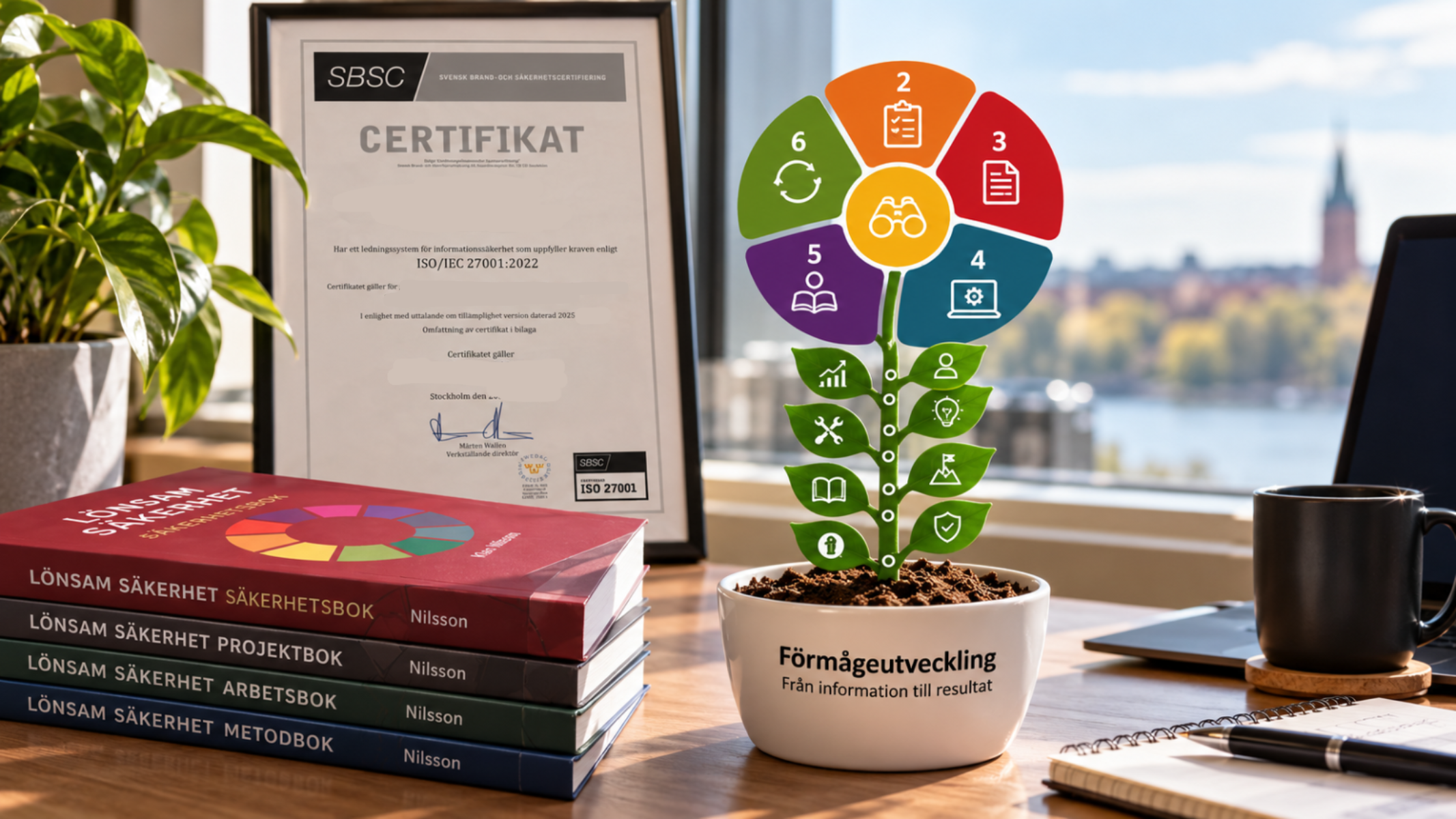
Over more than three decades in the security profession, I have worked to improve information security in several different organizations, including by implementing procedures and security measures based on ISO 27002 and its predecessors, dating back to when the Swedish standard was known as SS 627799.
None of these organizations were certified to ISO 27001, nor was certification necessarily the objective. The aim was to strengthen information security and establish systematic procedures that worked effectively in day-to-day operations.
In a later role as head of security, however, the objective was clear: the organization was to achieve ISO 27001 certification. This was an extensive and educational experience that ultimately resulted in successful certification. Despite my previous experience in information security, risk management and security leadership, the implementation process taught me several important lessons. Perhaps the most significant was the difference between documenting how an organization is supposed to operate and actually getting people to work that way.
An Established Foundation Makes Implementation Easier
A significant advantage during implementation was that the organization already had established management systems for quality and environmental management based on ISO 9001 and ISO 14001. Information security could therefore be integrated into the existing management framework.
We already had established processes for internal audits, nonconformity management, management review and continual improvement. This allowed us to build on existing procedures rather than establish an entirely new management system.
The work included identifying information assets, analyzing risks, clarifying responsibilities and developing documented policies and procedures. We also needed to understand the requirements of customers, regulatory authorities, suppliers and the organization itself. An important part of this process was developing an understanding of the value of information. Information can be one of an organization's most valuable assets, while also being essential to its ability to deliver products and services to customers.
It became clear that information security must be an integral part of the organization's processes and day-to-day operations.
The Organization Must Take Ownership of Implementation
One of my most important lessons is that the organization itself must take responsibility for implementing its management system. I actually prefer to talk about working methods, as this more clearly describes what the management system is intended to achieve in practice.
Throughout the project, we received support from external consultants. They contributed valuable perspectives, but I also learned the importance of continuity, organizational knowledge and practical experience in implementing management systems. Expertise in information security does not necessarily mean experience in implementing a management system based on ISO 27001. These are two closely related but distinct areas of expertise.
When I took greater responsibility for leading the implementation, we were able to move the work forward with greater continuity and a stronger connection to the organization's specific circumstances.
External consultants can contribute specialist expertise, experience and additional resources, but they cannot fully replace the organization's own understanding of its processes, employees and risks. A management system must continue to function long after a consulting assignment has ended. The knowledge and experience developed during implementation must therefore remain within the organization.
You can hire external expertise to help implement a management system. But the organization itself must develop the capability to use it.
Why Don't Employees Follow My Instructions?
During the implementation, I spent considerable time writing policies, guidelines, instructions and other governing documents. They needed to be clear, relevant and practical. Personally, I thought they turned out very well. Nevertheless, I sometimes discovered that employees continued working exactly as they had before.
Why weren't they following the instructions? After all, I had put considerable effort into explaining how the work should be done. The documents had been reviewed, formally approved and published in the management system.
That was when it finally clicked.
Just because I, as the security manager, have written an instruction does not mean anyone has read it. And even if someone has read it, that does not mean they have understood it, accepted it or started applying it in practice.
It sounds obvious when you say it out loud, but this realization changed the way I think about security management. I had focused heavily on developing the organization's governing documentation. Yet the documentation was only one of the prerequisites for changing how the organization actually operates.
The real work began once the documents were completed.
From Information to Capability
This realization led me to develop a model for individual and organizational capability development, which I call the Flower. The model describes how individuals progress from receiving information to being able to perform tasks and take responsibility for the results. The development process consists of eight stages:
Information → Knowledge → Understanding → Experience → Competence → Capability → Performance → Responsibility.
However, development does not happen automatically. Employees may possess both knowledge and competence but still lack the conditions necessary to perform their tasks. This may result from insufficient resources, inadequate authority, unclear leadership or other organizational factors. The model therefore also considers the individual's internal and external conditions. Before an employer can reasonably establish performance requirements, the necessary conditions for employees to meet those requirements must be in place.
Organizational capability develops through the interaction between the organization and its employees. It is a continual process based on the organization's circumstances, including stakeholders, requirements and the threat landscape. These factors provide the basis for planning activities, assigning responsibilities, allocating resources and documenting common procedures. Through operational support and individual capability development, employees are equipped to apply these procedures in practice. Monitoring, lessons learned and continual improvement then strengthen the organization's overall capability over time.
I named the model the Flower because capability development, like a flower, requires ongoing care and attention to continue growing. The model is described in Profitable Security – Security Book, in the chapter on capability development.
Management Must Want the Management System, Not Just the Certificate
Another important lesson is the significance of management commitment. It is relatively easy for senior management to decide that the organization should achieve ISO 27001 certification. Implementing and maintaining the systematic approach required by the standard is considerably more demanding. An information security management system affects the entire organization. It influences how risks are identified and managed, how decisions are made, how responsibilities are assigned, how employees perform their tasks and how the organization monitors and improves its performance.
This requires management to demonstrate commitment, allocate resources and actively lead the development process. The security manager can lead and coordinate the implementation, but cannot single-handedly change how the organization operates. Senior management must establish the direction, make decisions and provide the necessary resources. Managers at different levels must translate these decisions into day-to-day operations, while employees must develop the competence and capabilities needed to perform their tasks. The security function's role is to support, coordinate and monitor the development process.
I have therefore become increasingly convinced that management's most important decision is not to pursue certification. It is to commit the organization to systematic information security management. Certification then serves as independent confirmation that the management system meets the requirements of the standard. When management is genuinely committed to the way of working, the organization is also better positioned to sustain the improvements long after certification has been achieved.
The Value of Certification Also Depends on Who Conducts the Audit
One of my most positive experiences during the implementation was working with Swedish Fire and Security Certification (SBSC) as our certification body. SBSC has extensive experience in the security industry and a strong understanding of the requirements faced by organizations with demanding security needs. I found their auditors to be highly competent, thorough and professional. They took no shortcuts. The audit was rigorous, and the questions were relevant. We had to demonstrate that our management system met the requirements and that our procedures worked in practice. I appreciated that.
The certification market includes different providers with varying levels of experience, industry expertise and approaches to auditing. When selecting a certification body, it is therefore important to consider more than the price and how quickly a certificate can be issued.
A certificate should inspire confidence among customers and other stakeholders. That confidence depends, among other things, on the audit being conducted competently, independently and with a high degree of professional integrity. As a client, I want an auditor who sets high standards, identifies weaknesses and is willing to challenge our procedures. This may mean more work during the certification process, but it also helps the organization improve. I would rather undergo a demanding audit that makes us better than an easy one that simply results in a certificate.
My experience with SBSC is that they take their responsibilities very seriously. Their expertise and thoroughness helped improve the quality of our work and gave me considerable confidence in the certification process. For me, that is an important part of the value of certification.
When the Project Ends, the Real Work Begins
By the time we achieved certification, we had made significant progress. Our management system had been certified, risks had been identified, responsibilities clarified and numerous improvements implemented. At the same time, further work was needed to develop and embed consistent procedures throughout the organization. This is an ongoing process that is never truly complete.
This is entirely natural. Implementing a management system involves organizational change that must continue long after the implementation project has ended. This is one of the lessons I have carried forward into developing the Profitable Security book series.
In Profitable Security – Project Book, I explain, among other things, the distinction between project deliverables and the capabilities the organization actually needs to develop. A project can deliver a new system, documentation and training. However, the intended benefits are only realized when these deliverables are adopted and used effectively in day-to-day operations. A management system is a particularly clear example. It must not only address current risks and requirements but also enable the organization to identify and implement future improvements.
What Would I Do Differently Today?
Based on my experience from the implementation, I would place even greater emphasis on securing organizational commitment and planning capability development from the very beginning of the project. I would also make it clear that certification is a milestone along the way, while the long-term objective is to develop the organization's capability to work systematically and continually improve its performance.
This means planning from the outset how new procedures will be introduced, which employees need training, how managers will monitor compliance and who will be responsible for ongoing improvement. After all, meaningful change only occurs when people actually start working differently.
Perhaps this is the most important lesson I have taken from implementing ISO 27001. A management system is, ultimately, a way of working, not a folder on a bookshelf or a piece of software on a computer. The certificate should serve as confirmation that the management system meets the requirements of the standard and operates as intended.
The real value, however, lies in how the management system develops the organization's capability to achieve its objectives. Learn more about capability development in my books and the Profitable Security model at profitablesecurity.com.