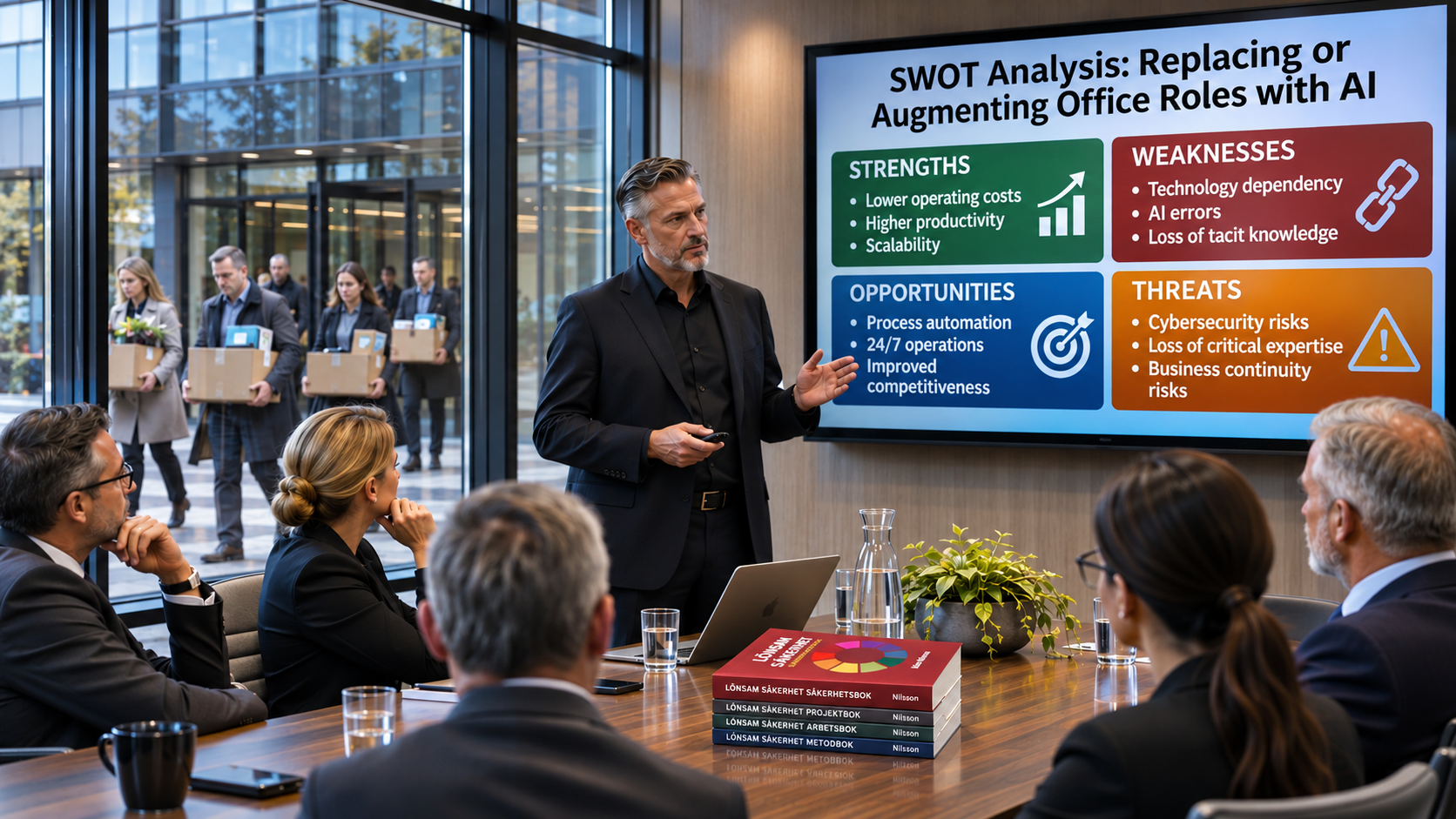
Demonstrating your economic value in an increasingly automated workplace. Practical advice for security managers, employees and job seekers on identifying, documenting and communicating their contribution to the business.
Become a trusted advisor to your leadership team. How security can help the business reach its goals faster, win new contracts and grow revenue, with all three Profitable Security books now available in English.
How can local crime statistics become useful decision support? Expected Annual Impact connects frequency, damage and exposure before asset values are introduced, whether the assets are vehicles, apartments, servers or something else.
What does the organization do when a suspected irregularity is not investigated further? About ten ways an internal investigation can create financial value, from stopped losses to better controls.
Why is a good security solution sometimes never bought? About the different perspectives of the seller, the client and the management and how economic benefits make the investment easier to justify.
AI can give us quick answers and new opportunities, but also increase dependence on technology. About why personal knowledge, critical thinking and practical capability remain crucial for security and preparedness.
Experiences from the introduction of ISO 27001: why documentation is not enough, how employees' abilities are developed and why management's commitment determines the result.
AI provides faster analyzes and proposals for solutions, but competence, clear responsibility and short decision paths determine how quickly the organization can act. About Profitable Security as support for more effective security work.
AI can make work more efficient, but it can also introduce new security risks. About competence, evolving AI capabilities, Shadow AI and accountability when the technology goes wrong.
AI is reshaping the security manager's role. The next generation of security managers must combine security expertise with an understanding of the organization's goals, efficiency and profitability.
How much of your organization can continue operating when electricity, internet access and cloud services are unavailable? About priorities, staffing, dependencies and continuity during serious disruptions.
Thomas Loftén highlights the book's clear structure and easily accessible reasoning. He describes it as an easy-to-read introduction to systematic security work, especially for those who are new to the field or want better structure in their work.