Preparedness and continuity
Business Continuity During Crises and Heightened States of Alert
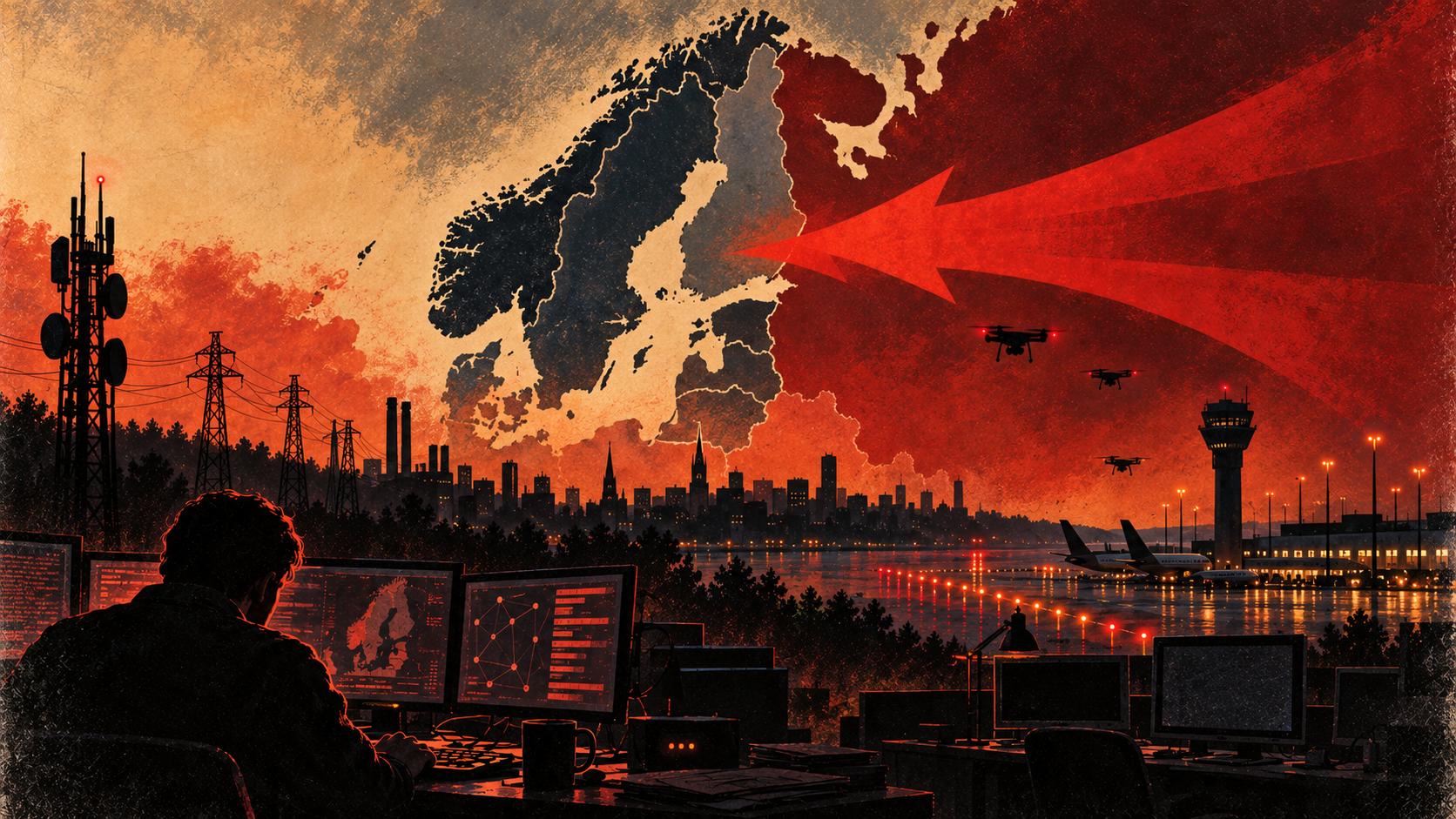
Russia's aggression and the growing threat of hybrid attacks have changed the security environment. At the same time, businesses and public authorities have become increasingly dependent on electricity, telecommunications, cloud services and external suppliers. How much of your organization can continue operating when normal conditions no longer apply?
The Swedish Security Service has described the threat of sabotage from Russia as real. However, a hostile actor does not necessarily need to target an organization directly. Exploiting existing vulnerabilities and dependencies may be enough to disrupt its operations.
For an organization, a technical failure, cyberattack, act of sabotage or supplier disruption may initially have the same consequences. The power goes out, the internet connection fails and critical support systems become inaccessible. The cause must be investigated, but operations must continue in the meantime.
Try a simple thought experiment at your next management meeting. Imagine operating without electricity or internet access for an entire working day. Then extend the disruption to three days. Which tasks can still be performed, which decisions can still be made and what information remains accessible?
Start with What Must Continue to Function
During a serious disruption, it is rarely possible to maintain all operations at normal capacity. Senior management must therefore determine which activities are essential, what minimum operating levels are acceptable and how long each activity can remain disrupted.
The starting point is the organization's mission, assets and obligations, together with the consequences of interrupting specific activities. The requirements for personnel, information, premises, technology, electricity, communications and suppliers can then be assessed.
Someone must also have the authority to reprioritize activities, activate contingency arrangements and temporarily accept reduced service levels. An organizational chart alone does not create the ability to act if every difficult decision still has to be escalated.
Organizational Staffing Begins at Home
During Sweden's Preparedness Week, attention is focused on household emergency preparedness. For employers, this is more than a private matter because it directly affects how many employees will actually be available for work during a crisis.
A business continuity plan may assume that a certain number of employees will report for duty. That assumption may prove unrealistic if their families lack safety, heating, water or food. The same applies when childcare or care arrangements for elderly or ill relatives are disrupted. Employees will naturally prioritize resolving urgent situations at home.
Employers do not need to control their employees' personal preparedness, but they can provide information and explain how household preparedness contributes to the resilience of both the organization and society. At the same time, continuity planning must account for reduced staff availability. Critical knowledge and skills must therefore be shared among several employees, and the organization must be capable of operating with fewer personnel.
For activities that must continue, employers may also need to plan for the needs of personnel at the workplace. Access to food, water, rest, reliable information and communication with family members affects how long employees can remain on duty.
When Knowledge Resides in the Systems
Digital support systems have made organizations more efficient. Business applications guide employees through workflows, perform calculations, validate information and support decision-making. At the same time, some of the organization's knowledge has shifted from employees to digital systems. After several years, few employees may still know how to perform their tasks without digital assistance.
A cloud-based business application may be functioning perfectly but still become inaccessible when the internet connection fails. Backups protect data against loss but do not automatically ensure access during an ongoing disruption. The question is what employees can do when the screen no longer tells them what to do next.
Contingency procedures must therefore go beyond technical recovery. Critical information may need to be available locally, alternative communication channels must be established and employees must be capable of working manually or at reduced capacity. This capability must be developed and maintained through practical exercises.
Outsourcing and cloud services also place parts of the organization's operational control beyond its direct reach. A service may depend on subcontractors, data centers, identity management services and communication networks with which the customer has no direct relationship. Two seemingly independent providers may rely on the same underlying infrastructure. As a result, the backup solution may fail at the same time as the primary service.
Organizations cannot properly assess risks or plan for continuity without understanding their dependencies. Critical services and supply arrangements therefore require sufficient visibility to identify shared dependencies and potential single points of failure.
Trust Is Tested During a Crisis
Customers, citizens, employees, owners and partners judge an organization not only by what happens, but also by how it responds.
A major disruption may be accepted if the organization communicates openly and demonstrates that the situation is being managed. Even a minor disruption can develop into a crisis of confidence if information is delayed, contradictory or misleading. Crisis communication must therefore remain effective even when websites, telephone systems and internal communication channels are unavailable.
A business continuity plan is, in practice, a hypothesis about the organization's capabilities. Only through testing and exercises can the organization establish whether personnel are available, critical information is accessible, contingency procedures work and decision-making authority is sufficient.
Start by asking a few straightforward questions: Which activities must continue? How many employees can realistically be available? What can we accomplish without electricity, internet access or cloud services? What dependencies exist within our supply chains? How would our stakeholders' trust be affected if we failed to maintain essential operations?
The answers reveal where preparedness must be strengthened. Ultimately, preparedness is about the ability to act. Organizations that can prioritize, make decisions and maintain their most critical activities are better equipped to withstand technical disruptions, hybrid threats, crises and heightened states of alert.

This article draws on the principles of preparedness and business continuity presented in Profitable Security: Security Book. Learn more about the Profitable Security book series.
Please share the article with someone who might benefit from it.